

- February 6, 2026
- Posted by: Info
- Category: Car Insurance
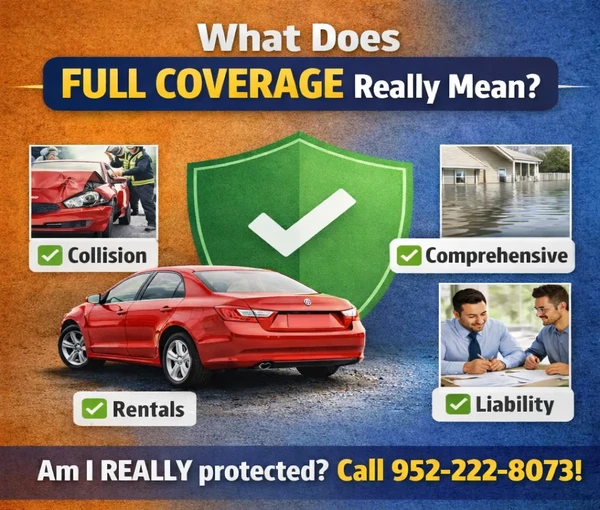
When shopping for auto insurance, many people ask for “full coverage”, believing it means they’re protected in every situation. Unfortunately, there’s no such thing as an official insurance policy called “full coverage.” The term is commonly used. But it often creates confusion and unrealistic expectations.
Understanding what “full coverage” really means can help you avoid costly surprises and make smarter insurance decisions.
What Most People Say by “Full Coverage”
In most cases, “full coverage” refers to a combination of key protections that work together. These usually have:
Liability Coverage
This pays for injuries or property damage you cause to others in an accident. It doesn’t cover your own vehicle.
Collision Coverage
This helps cover the cost of repairing or replacing your vehicle after an accident, regardless of who’s at fault.
Comprehensive Coverage
This protects your vehicle from non-accident losses, including theft, hail, fire, vandalism, and flooding.
When these three coverages are combined, they are often referred to as “full coverage.” However, this doesn’t say everything is covered in every situation.
Why “Full Coverage” Can Be Misleading
Two drivers can both have “full coverage” and still have very different levels of protection. The difference comes down to limits, deductibles, and policy details.
For example, one driver may carry low liability limits that barely meet state requirements. Another may have higher limits to improve rescue and protect their assets. One policy may have a $500 deductible, while another requires $2,500 out-of-pocket before coverage applies.
These differences can have a major financial effect after a claim.
Relying on the phrase “full coverage” without reviewing your actual policy can go you exposed.
Important Add-Ons Many Drivers Miss
True protection often includes more than just the basics. Many drivers benefit from additional coverages such as:
Rental reimbursement
Roadside assistance
Gap insurance
Uninsured/underinsured motorist coverage
Medical payments coverage
Without these, you may still face significant expenses even with “full coverage.”
An experienced agent can help you determine which options fit your situation.
How Your Life Affects Your Coverage Needs
Your insurance needs go over time. Buying a home, starting a business, adding drivers, or upgrading vehicles all shift the level of protection you need.
A policy that worked five years ago may no longer be adequate today. Without regular reviews, you may be underinsured without realizing it.
That’s why annual policy checkups are so important.
Why Working With an Independent Agency Matters
Independent agencies aren’t tied to one insurance company. They can review multiple carriers and tailor coverage to your needs.
Instead of offering a single standard option, independent agents assess your risks and budget. And goals to make the right combination of protection.
This helps ensure you’re not paying for unnecessary coverage or missing critical protection.
How Insuring Minnesota Helps You Get Real Protection
At Insuring Minnesota, we believe insurance should be simple and transparent. And reliable. Our team takes the time to explain your coverage, identify gaps, and shop multiple top-rated carriers.
We focus on helping clients get:
What’s covered
What’s excluded
How deductibles work
How claims are handled
How to improve protection affordably
Our target is to give you confidence, not confusion.
Get a Coverage Check Today
If you’re not sure what “full coverage” means on your policy, now is the time to find out. A quick check can assist prevent expensive surprises later.
Contact Insuring Minnesota today to schedule a policy review and ensure your coverage truly protects you and your future. 952-222-8073