

- April 2, 2026
- Posted by: Info
- Category: Uncategorized
No Comments
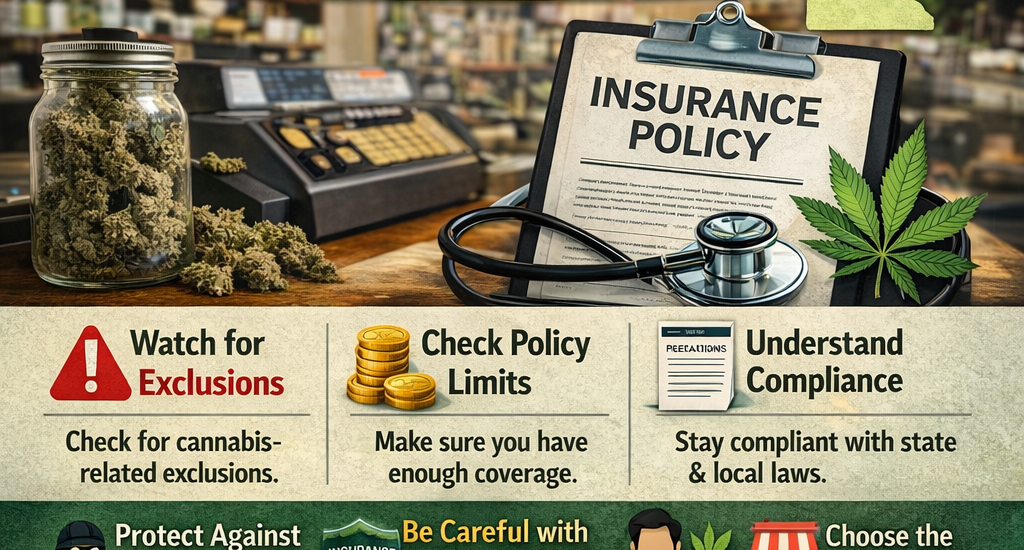
Opening a cannabis dispensary in Minnesota presents significant opportunities, but also unique risks and insurance challenges. As the industry evolves, it is essential to select insurance coverage carefully. Inadequate coverage can result in costly gaps that jeopardize your business.
Consider the following key points before purchasing cannabis dispensary insurance in Minnesota.
1. Don’t Assume Insurance Is Optional (Even If It’s Not Required)
A common misconception is that insurance is unnecessary. While Minnesota does not legally require dispensaries to carry insurance, this does not eliminate the need for coverage.
However, insurance is often required in practice:
- Landlords often require proof of insurance before signing a lease
- Lenders typically require coverage to secure financing.
- Vendors and contracts may demand liability protection.
Also, workers’ compensation insurance is required if you have employees, and commercial auto coverage is required for business vehicles.
Bottom line: Operating without insurance, even if not universally mandated, exposes your business to significant risk.
2. Understand That Basic Policies May Not Be Enough
Many dispensary owners purchase standard business policies, assuming they provide sufficient coverage. However, cannabis businesses face specialized risks.
At a minimum, you should evaluate:
- General liability (customer injuries, lawsuits)
- Product liability (issues with cannabis products sold)
- Commercial property (inventory, equipment, theft, fire)
- Business interruption (lost income during shutdowns)
While these are foundational policies, cannabis businesses often require enhanced or specialized endorsements due to the nature of the product and regulatory requirements.
Be aware: Generic policies may exclude cannabis-related claims.
3. Watch for Coverage Exclusions (This Is Critical)
This is one of the most overlooked and potentially serious issues.
Some insurance policies:
- Exclude cannabis-related operations entirely.
- Limit coverage for THC products.
- Deny claims tied to federal illegality.
Because cannabis remains illegal at the federal level, some insurers include exclusions that may leave you unprotected.
👉 Always ask:
- “Does this policy fully cover cannabis operations?”
- “Are THC products explicitly included?”
- “Are there federal legality exclusions?”
If the answers are not clear, consider other options.
4. Pay Attention to Policy Limits
Cannabis-related claims can be costly. Even a minor incident or product liability claim may exceed low policy limits.
Some guidance. General liability limits often start at $1 million per occurrence and $2 million aggregate.
But many dispensaries need higher limits depending on:
- Foot traffic
- Product volume
- Location
- Revenue
Do not settle for minimum coverage; ensure your protection matches your actual exposure.
5. Make Sure You’re Compliant with State & Local Rules
Minnesota’s cannabis industry is regulated by the Office of Cannabis Management (OCM), making compliance essential.
Important considerations:
- You must maintain licensing and follow strict operational rules.
- Cities and municipalities can restrict or prohibit dispensaries.
- Security systems, tracking, and operational procedures are required.
Insurance policies often include compliance clauses, meaning that if you violate regulations, your claim could be denied.
If you are not compliant, your insurance may not cover the costs.
6. Choose an Agent Who Understands Cannabis insurance differs from traditional business insurance and requires specialized expertise. Knowledge.
When choosing an agent, make sure they:
- Work with cannabis-specific carriers.
- Understand dispensary operations
- Stay current with Minnesota regulations.
- Can customize coverage as your business grows
Industry guidance recommends working with professionals who have direct cannabis experience and established carrier relationships.
Selecting the wrong agent can be more costly than choosing the wrong policy.
7. Don’t Underestimate Property & Theft Risks
Dispensaries maintain high-value inventory, which increases the risk of theft.
You need to ensure:
- Inventory is properly valued and insured.
- Coverage includes theft, not just fire or damage.
- Off-site or in-transit inventory is protected (inland marine coverage)
Standard property policies may not fully cover cannabis inventory unless specifically endorsed.
If your inventory is not properly insured, a single loss could be financially devastating.
8. Plan for Business Interruption
What happens if your dispensary shuts down due to:
- Fire
- Theft
- Equipment failure
- Regulatory issues
Business interruption insurance can help replace lost income during periods of downtime.
Many owners overlook this coverage until it is too late.
9. Understand That the Industry Is Constantly Changing
Minnesota legalized recreational cannabis in 2023, and regulations continue to evolve.
That means:
- Insurance requirements may change.
- New coverages may become available.
- Risks will evolve as the market grows.
Your insurance coverage should be reviewed regularly, not just at the time of purchase.
Final Thoughts
Purchasing cannabis dispensary insurance in Minnesota is not simply a regulatory requirement; it is essential for protecting your livelihood in a complex, high-risk, and rapidly changing industry.
To recap, be careful to:
- Avoid policies with cannabis exclusions.
- Choose adequate limits (not just minimums)
- Work with a cannabis-experienced agent.
- Ensure full compliance with regulations.
- Customize coverage to your specific operation.
The right insurance strategy not only protects your business but also provides the confidence to support its growth.
If you are entering Minnesota’s cannabis market, take the necessary time to ensure proper preparation. The risks are real, but with the right guidance, they are manageable.